Our Campaigns

Akshara believes that genuine social change comes when people believe in and implement equality in their lives. Not only because the Indian Constitution declares and upholds gender equality but because people feel that it is the right thing to do. However, the majority of people recognise the right to equality but have yet to move out of their traditional grooves and start practicing it.

How do we change the present narrative for a more progressive, equal and just one?

We want a society in which pink or blue are colours without gender association; where bearded, muscled men are gentle giants and women can claim to be warriors; there is no fear of violence and all have the opportunity to be creative and productive. One way of impacting a large number of people is through public campaigns which bring awareness and information of problematic or unconscious and discriminatory behaviour. Some of the largest public campaigns for social impact have been initiated by the central and state governments. Corporates often combine social messaging along with product advertising.

In a smaller way, non-profit organisations launch social messaging for public awareness. Akshara believes that a mix of online messaging and on ground activities can help in changing gender stereotypes and prevent violence. Below are some of our public campaigns which we have been continuously rolling out to remind people of gender equality.

Changing Gender Stereotypes
Dial for Help
BEST Foot Forward?
Walking Safely
Mumbai Local
Showtime with Youth
Gender Bender Games

Changing gender stereotypes

Most of the time, we are not aware of how entrenched sexual harassment is in our culture. If we look critically at popular Bollywood film chart busters, we can spot the promotion of harassment, stalking and even violence – all in the name of love or protection or understanding a woman’s silence as consent. Films reflect the common attitude of people towards sexual harassment as being a trivial issue which is often done in the name of teasing or fun. However, it is neither love nor fun for the women who are harassed.

In order to challenge existing misconceptions of sexual harassment, Akshara asked people to locate popular film songs and turn them on their heads. Gaana Rewrite was launched as a public campaign in the form of a national competition for young people. Organized along with partners like EKSAATH, Girls Count, and One Billion Rising, it invited people across India to rewrite popular songs that objectified women. The campaign reached over 100 colleges through youth-led outreach and generated 150 entries from a diverse group of participants aged 16 to 65. The campaign culminated at the 2018 Kala Ghoda Arts Festival in Mumbai, where the rewritten songs were performed live.

Gaana Rewrite Campaign

The video had over 60,000 views and a wide media coverage as it celebrated gender-equal expression in music. Akshara won the Inspire Award in the category for Women's Empowerment by BWW and Parivartan Initiative.

Films have an enormous impact on the minds of people who pick up fashion styles, gestures, values and actions from their heroes. Akshara continued its campaign in 2025 with the Disclaimer Campaign and two videos. We used the concept of Disclaimers and trigger warnings which alert viewers to content which is objectionable or should be viewed with caution. This concept has been used by the anti-tobacco lobby which set a precedent by successfully introducing the disclaimer Tobacco Kills to point out a potential health risk and de-glamorise smoking. In a similar manner, Akshara would like the film viewer to be warned that the numerous scenes of rape, domestic violence and sexual harassment which are often seen as masculine, and glamorise violence against women are an offence and legally a crime. It violates the rights of women, culturally and legally speaking.

Click on the videos below

Within the home, gender equality takes a hit as the load of housework falls on women. This is a popular gender stereotype in which women are seen as homemakers and men as earners.

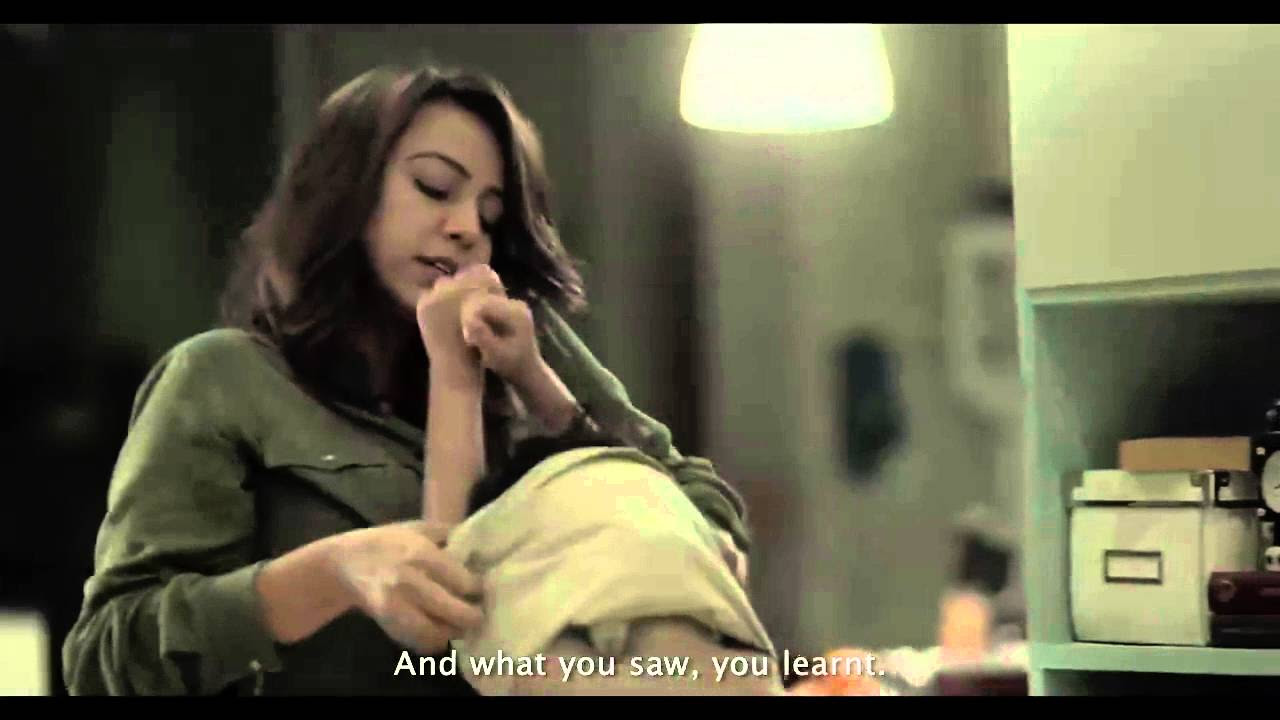
Akshara collaborated with Ariel India’s #SeeEqual initiative which launched a series of videos showing that men too need to take responsibility for household work.

In September and October, 2018, Akshara held an offline campaign by motivating students from 24 city colleges to screen these videos and have discussions on everyday gender roles. These sessions sparked critical thinking on the gender division of work amongst over 3,000 young minds, urging them to question and challenge gender-based inequalities in unpaid domestic work. The online campaign by Ariel had 25 million views within one month of its release and an amazing 1.5 million men pledged to share housework
Share the Load Campaign
Share the Load - Ariel #SeeEqual Campaign
Ariel Campaign Video
Ariel #SeeEqual Campaign

Dial for Help

A 2006 research study that revealed 60% of women students in Mumbai and Thane had experienced street sexual harassment. Responding to these alarming findings, Akshara worked with the Thane Police in 2007 to allocate a dedicated helpline number, 2554 3535 for reporting such incidents. The Leher Campaign was launched in partnership with the Thane Police, the Special Cell for Women and Children, and the India Centre for Human Rights and Law to mobilise youth from local colleges to spread awareness about the helpline and the importance of reporting harassment.

Women Dial for Help campaign

In 2008, the Thane helpline was replicated in Mumbai under the number 103. This development took place after the horrific incident of sexual molestation of two women on New Year's eve. It was called Mumbai's shame

Women’s groups along with some celebrities appealed to the police commissioner to set up an emergency helpline. Akshara was tasked with preparing a Standard Operational Procedure and to conduct trainings. Akshara worked over six years to strengthen it through training women police call-takers, streamlining offence categorization, improving documentation, and supporting technical coordination.

Publicity efforts included creative outreach like mobile vans, ads in cinema theatres, and media coverage to raise awareness about the helpline. As a result, 103 receives over 300 calls a day and is used highest by survivors of domestic violence and then by women facing sexual harassment.

Through the next 3 years, Akshara continued the campaign to popularise the emergency helpline by distributing 8000 pamphlets and organising student initiatives like flash mobs, signature campaigns and poster exhibitions.

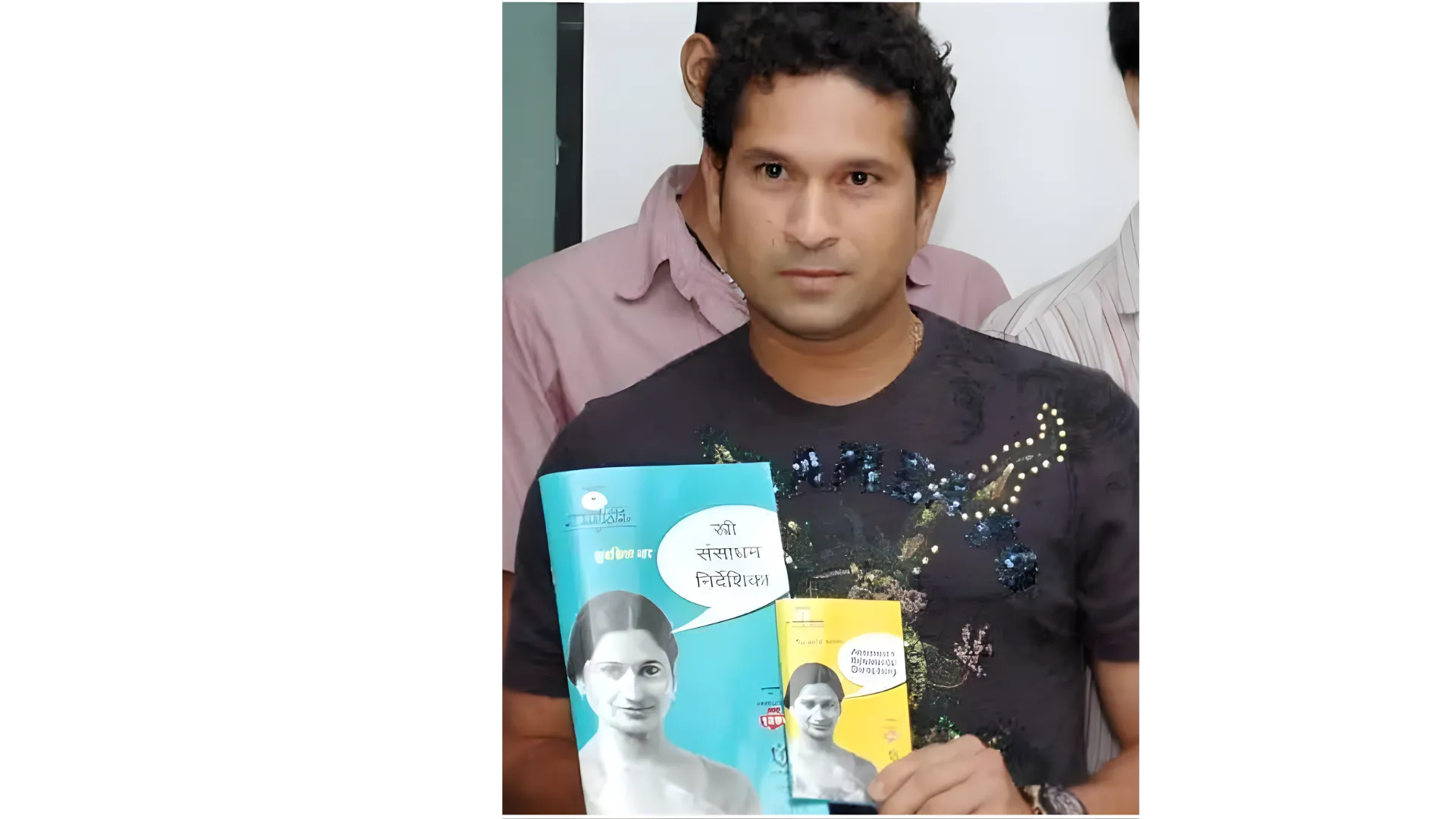
For numerous reasons, women hesitate to go to the police. For them, Akshara, in collaboration with the ambulance service 1298, has produced a Women's Resource Directory. It was launched by cricketer Sachin Tendulkar along with the city sheriff and the Principal of H R College. It had details of nearly 75 NGOs and government agencies working for women, children and senior citizens in 2008.

Women's Resource Directory

The Directory has been revised with new additions. However, during the Covid Lockdown, it became redundant as all the offices were closed down. Unfortunately, the rate of domestic violence increased substantially according to the data put out by the National Commission for Women in 2020 and 2021.

Akshara responded to this alarming rise in domestic violence cases by launching two media campaigns and a web app to support survivors. In 2021, 400 printed guides for quick responses were distributed across Maharashtra by the Inspector General to police control rooms, one-stop centres, special cells, and district protection officers. These tools aimed to provide accessible, immediate help to women facing abuse during the crisis. The initiative stressed the fact that during isolation, support systems must remain active and visible.

The other dismaying impact of the Covid Lockdown was an increase in child marriages. Akshara launched the #JustAChild campaign to address the worrying increase in child marriages caused by school closures, economic hardship, and loss of guardians. In partnership with UNICEF and the Government of Maharashtra’s Ministry of Women & Child Development, the campaign encouraged the public to report cases by dialling 1098. Two powerful videos reached over 17.8 lakh people on social media. The campaign was amplified by the Maharashtra Police, government departments, ministers, and influencers. Additionally, four posters were released to further raise awareness and prevent early marriages.

BEST foot forward?

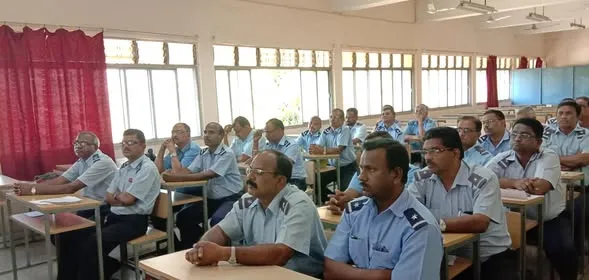
Mumbai's iconic red double decker buses are perhaps one of the best services in the country. Akshara's survey found that a large number of the 1.2 million daily women commuters experienced sexually harassment. One way of making bus travel safe for women, was to involve bus conductors and drivers in its prevention. In 2013, Akshara undertook trainings with bus conductors and drivers, explaining the issue of sexual harassment, its forms and its deep impact on women and girls. Through the years, Akshara has gender sensitised around 13,000 BEST personnel. A small copy of the Rule Card was made and distributed to all the bus conductors so they are aware that it is part of their work to prevent harassment.

From 2014 -2015, the Twarita BEST Bus Campaign involved 314 volunteers from 16 colleges who surveyed 1527 women commuters and present their recommendations. Large posters were put up in 26 BEST bus depots to conscientize their personnel as well as commuters on sexual harassment. Around 55% of the women surveyed reported noticing the campaign materials, and many became aware of the 103 emergency police helpline.

The recent Jaga Dakhva campaign [2022-23] targeted outstation buses. The Jaga Dakhva Videos launched in collaboration with MSRTC, reached an impressive 10.5 million viewers. The campaign had a presence across 15 bus stops in 6 cities with over 8,400 commuters engaged in discussions. The objective was to involve women commuters, students and MSRTC staff to encourage bystander intervention.

Best Foot Forward

Train: Mumbai Local

Around 2.5 million women commuters daily travel in local trains. These lifelines of the city have always had an only-for-women compartment policy. At present there are 3-4 reserved women's compartments and some Ladies Specials trains during peak hours. Does that make it safer for women? Yes, within the ladies compartments, women are free from harassment. But they do encounter it on the platforms, in general compartments and even within the ladies compartments late at night.

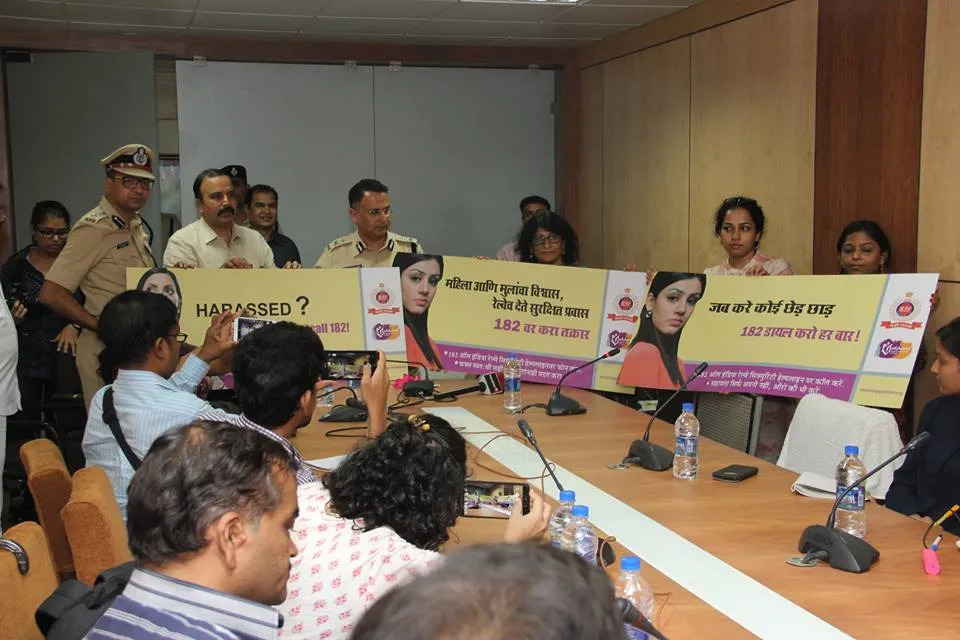
Akshara, in partnership with the Railway Protection Force [RPF], launched the campaign called Aap Ne Kya Kiya? [2015] which recognised that bystanders had a role in prevention as much as railway personnel.

Akshara trained 558 RPF personnel and 75 women from the Mahila Suraksha Squad using interactive and audio-visual methods and distributed booklets on prevention of sexual harassment. Posters were put up in women's only compartments of the Central Railway asking them to contact the emergency Helpline number 182 in case of harassment. On-ground, the campaign involved students from 18 colleges fanning out to hold awareness drives, interacting with commuters, urging women to take action against harassment and asking men to support women by intervening to prevent harassment.

Train Mumbai Local

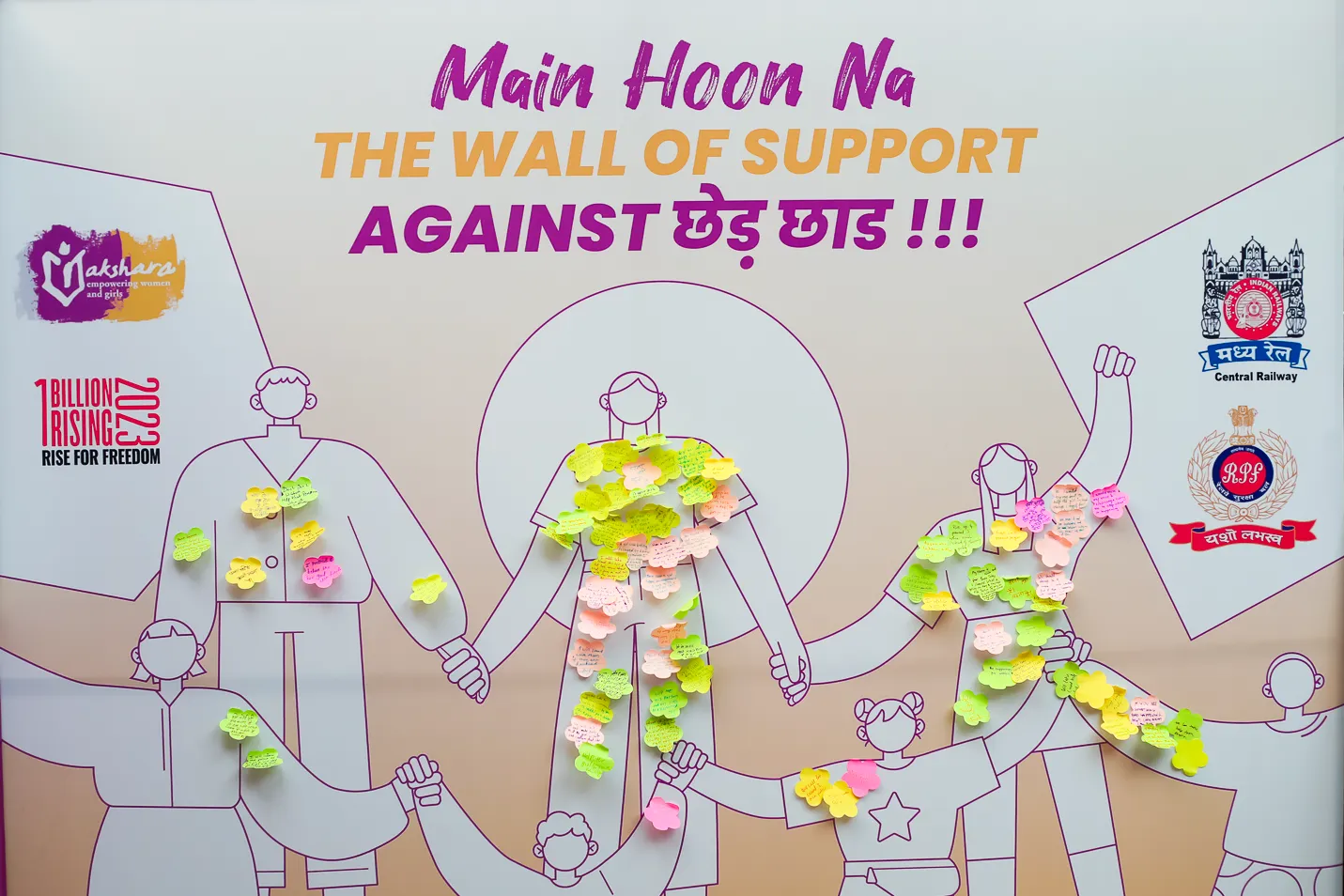
Another campaign called Main Hu Na was rolled out in 2021 at CSMT, Dadar and LTT stations with students from 25 colleges reaching out to 2000 commuters, engaging them in conversation, collecting 486 pledges to take a stand against harassment, and enacting street theatre performances.

Walking Safely

The issue of sexual harassment is a running thread throughout Akshara's programs and public campaigns. Akshara engages with both, young women, the most likely targets and young men, usually the perpetrators. From the time, it was referred to as 'eve teasing' to its transmutation to 'sexual harassment', Akshara has been battling with its myths/realities, organising student safety audits and walks, screening videos for discussion and working for a change in social attitudes to prevent the offence.

All acts of sexual harassment, big or small, emotionally hurt women, restrict their movements, change their plans and sometimes careers. Women and girls fear walking alone on public streets, or during late evenings/night or on certain roads as they know they will be groped, catcalled, threatened with violence or be whistled at. To understand the depth of the problem, Akshara involved students to carry out participatory research [2006] in 45 colleges and speak to 935 students and faculty on their personal experiences, their knowledge of the newly formed Women's Development Cell and its functioning. The data was recorded in a report entitled Unwanted Attention: Sexual Harassment in Colleges in Mumbai' [2009]. Akshara's interns learnt the art of video-making and came up with a short video called 'Jor se Bol' which became the basis for discussion amongst young people.

Unwanted Attention research video
Unwanted Attention: Sexual Harassment Research

The horrific gang rape of Nirbhaya [2012] once again spurred public discourse on violence against women and the need for legislative changes. Nationally, Akshara participated in these discussions and put forward the voices of young people. At the state level, it collaborated with the Ministry for Higher and Technical Education in promoting the new scheme, Jaagar Jaanivancha', a competition to encourage colleges to have sexual harassment free campuses. 93 colleges vied for the Rs 5 lakhs award.

Technology entered the struggle against sexual harassment, when Akshara heard about the Cairo-based HarassMap set up by women participating in the Arab Spring Movement. Akshara made an indigenous version called Harassmap-Mumbai. It was a socio techno tool using crowdsourcing to enable women to report their experiences and citizens to spot and report unsafe spaces. The idea was to get women to report and engage local groups and the police to take action. This version was computer based and a far cry from the present and more advanced apps.

Akshara encouraged college students to undertake Safety Walks to highlight conditions leading to sexual harassment since 2010. Students lobbied with their college principals for better security, painting over walls scribbled with sexual graffiti, installing lights and having separate sitting arrangements in the canteen. To help students understand the concept of Safety Walks and Audits better, a video called Youth for a Safer City and a manual entitled Walking for Women's Safety in English and Marathi were produced.

Showtime with Youth

At the end of the academic year, Akshara encourages large youth led events of over 500 students. Youth leaders use different and innovative methods to bring out gender issues in a fun manner. It is the ringing in the new whilst ringing out the old year. Mentioned below are some events, they regularly organise.

Khula Asmaan – the sky is the limit

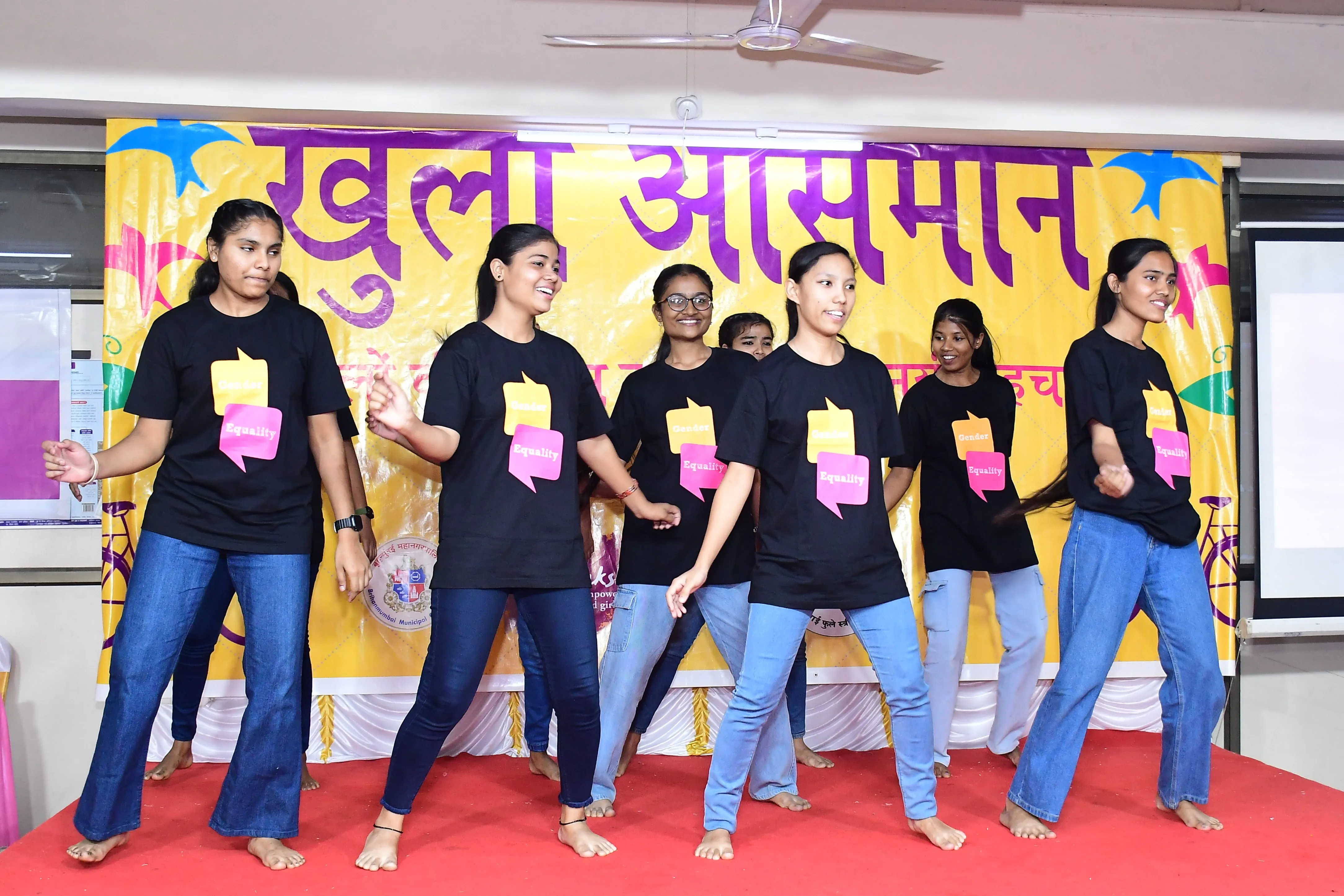
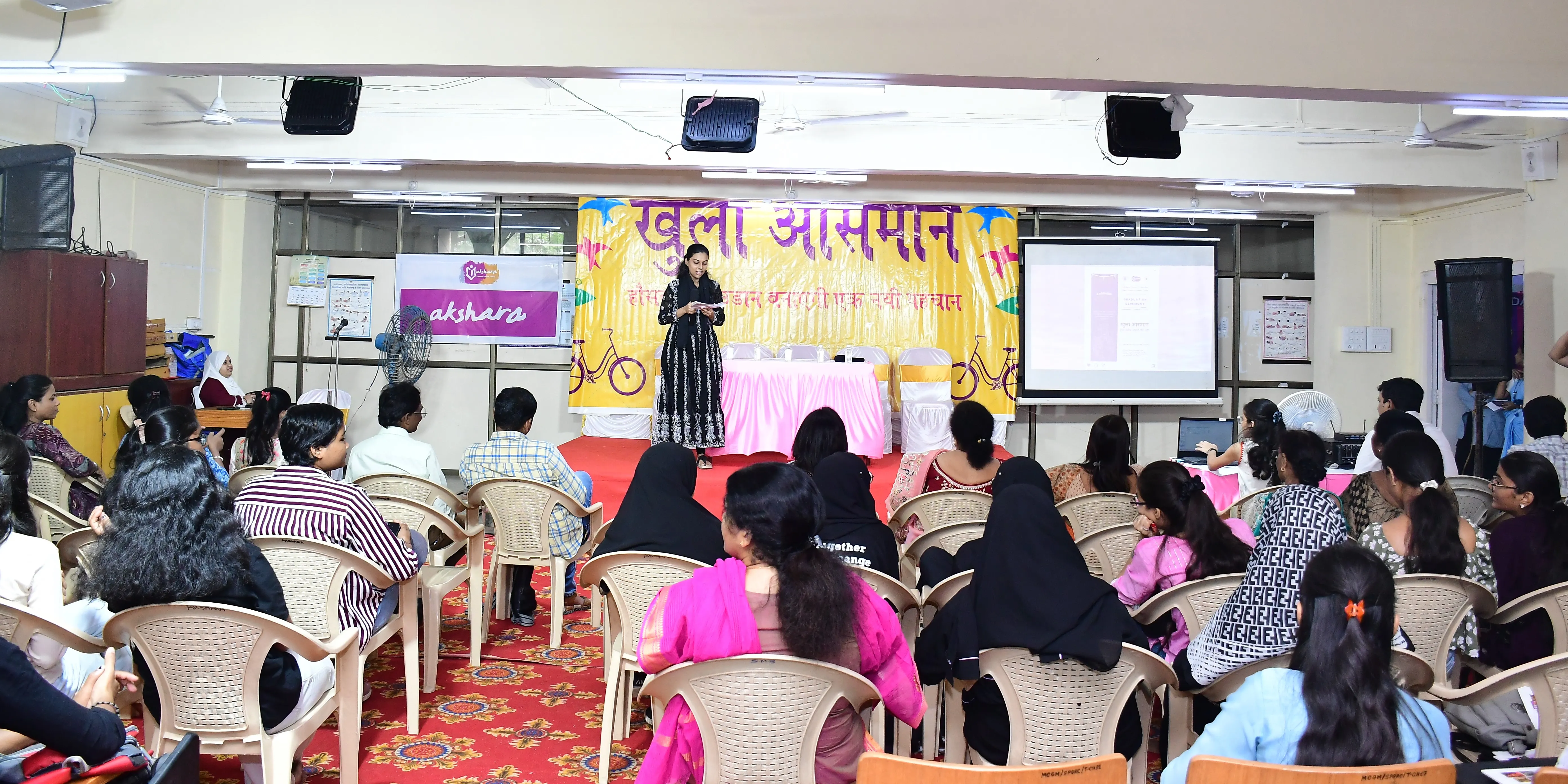
The present year's graduates welcome the new young women into Akshara's Empowering Dreams Program. Around 200 women with their parents celebrate their first, second- or third-year's graduation from college and from the Saksham, Swayamsidha or Swadhin courses. Each year, the level of their confidence increases and they become young leaders ready to face life. The evening is filled with dances, testimonies, food and fun.

Khula Asmaan graduation ceremony
Khula Asmaan celebration

YTalks

YTalks or Youth Talks is a platform organised by college students from 25 colleges to celebrate the closing of the year's program with discussions between two generations, gender bender games, rap songs, dances and flash mobs. 700 students spend an afternoon together.

The Night Run

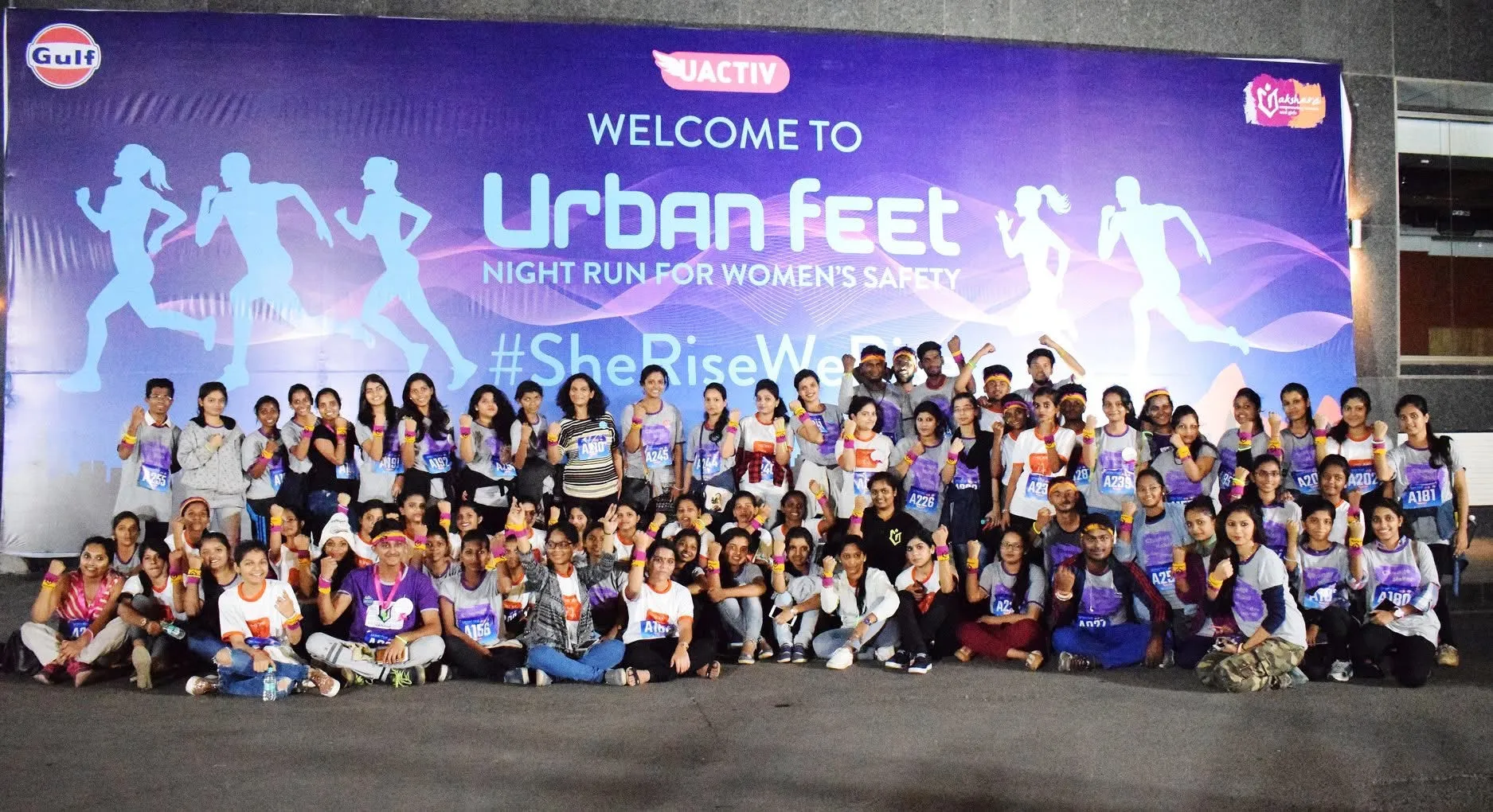
"Be home before dark" is what most women hear when they go out of the house. Gender norms say that women and girls should be at home most of the time but especially in the evenings and night. Men often make it their business to remind women of that unwritten rule through direct or indirect ways. Women, in many cities of the world, have marched under the banner of Reclaim the Night to protest and demand that roads and the city should be safe for them. Akshara too had a Reclaim the Night March in Mumbai. It also introduced another method to make the same point by organising the Night Run [2016-18].

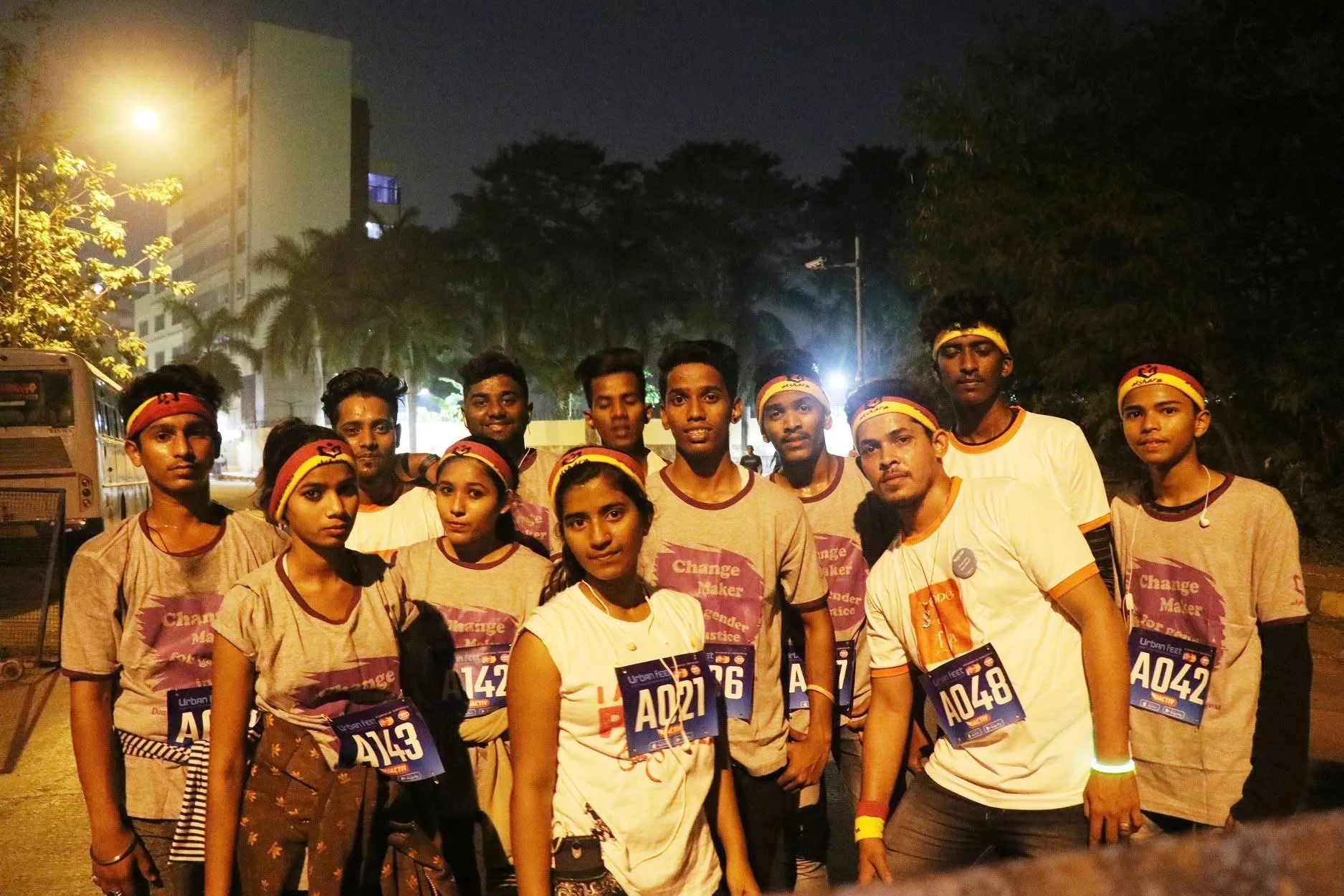
The 7 km Night Run starts at 8.00 pm with over 2000 Mumbaikars, including 1000 Akshara youth participants. It was organised in collaboration with UACTIV a health start-up and several celebrities like actor Shabana Azmi, Rahul Bose, and well-known Fitness Coach Mickey Mehta joined in support. After the Night Run, the students travelled in an open-air double decker buses around the city to 'reclaim' it.

Night Run participants
Night Run double decker bus

Gender Bender Games

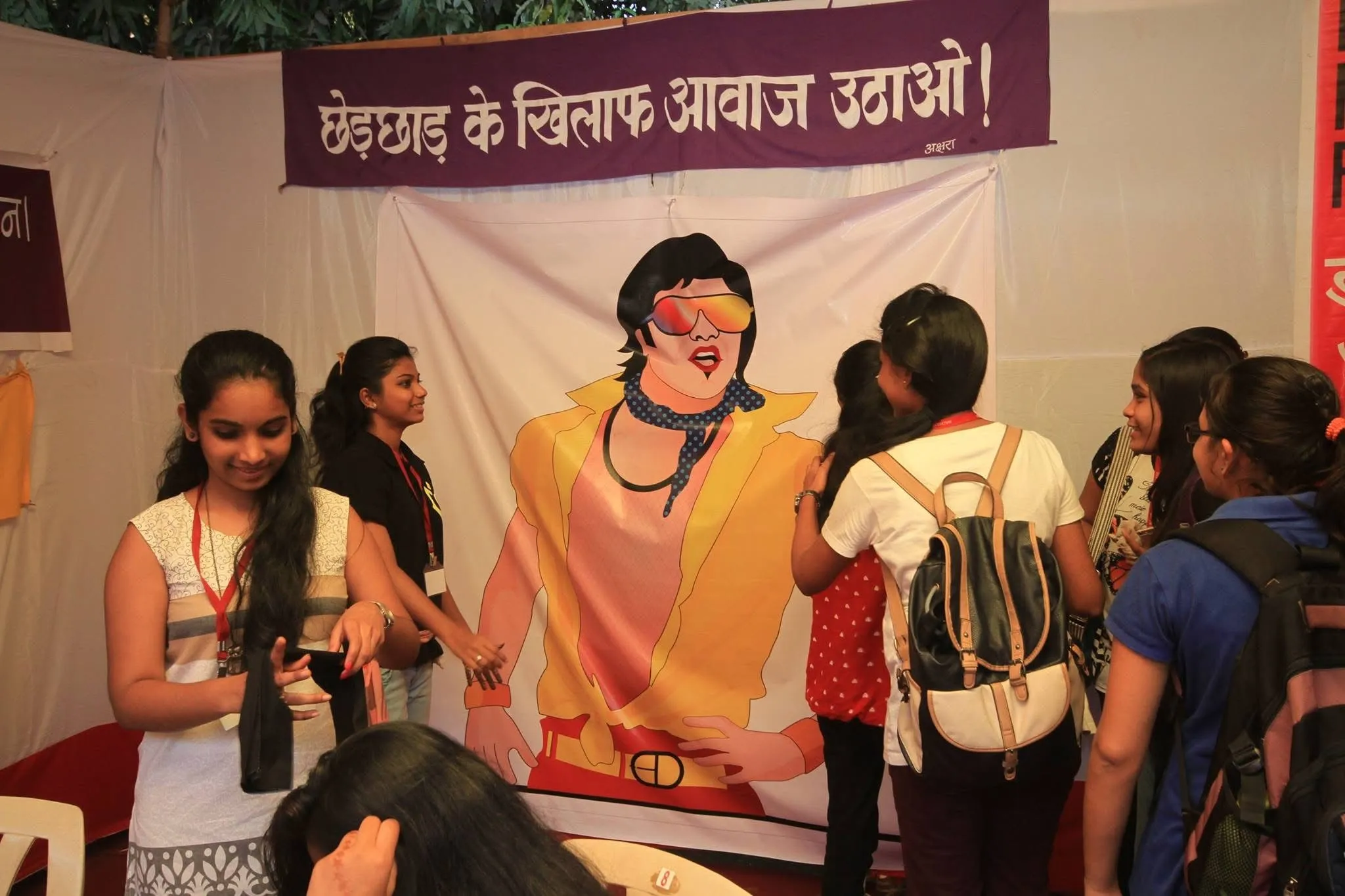
The concept of edutainment uses games to educate people. It's a popular method when one does not want to use the lecture mode of communication. And young people often prefer it as they hear lectures through the day in colleges or schools. Akshara developed a method of using traditional games and transforming them by giving them a gendered context. So, the old One Minute Game is transformed with students doing women oriented and men oriented tasks leading to a discussion on the gendered division of work in the home.

Several games put together in kiosks or stalls form a Mela or Fair. Thousands of such Melas have been held by collaborating with community-based organisations and training local volunteers. Akshara has developed a set of manuals for conducting Melas with young men, women and children. These manuals are available here.

See the Mela in action here